Week 11 · School news
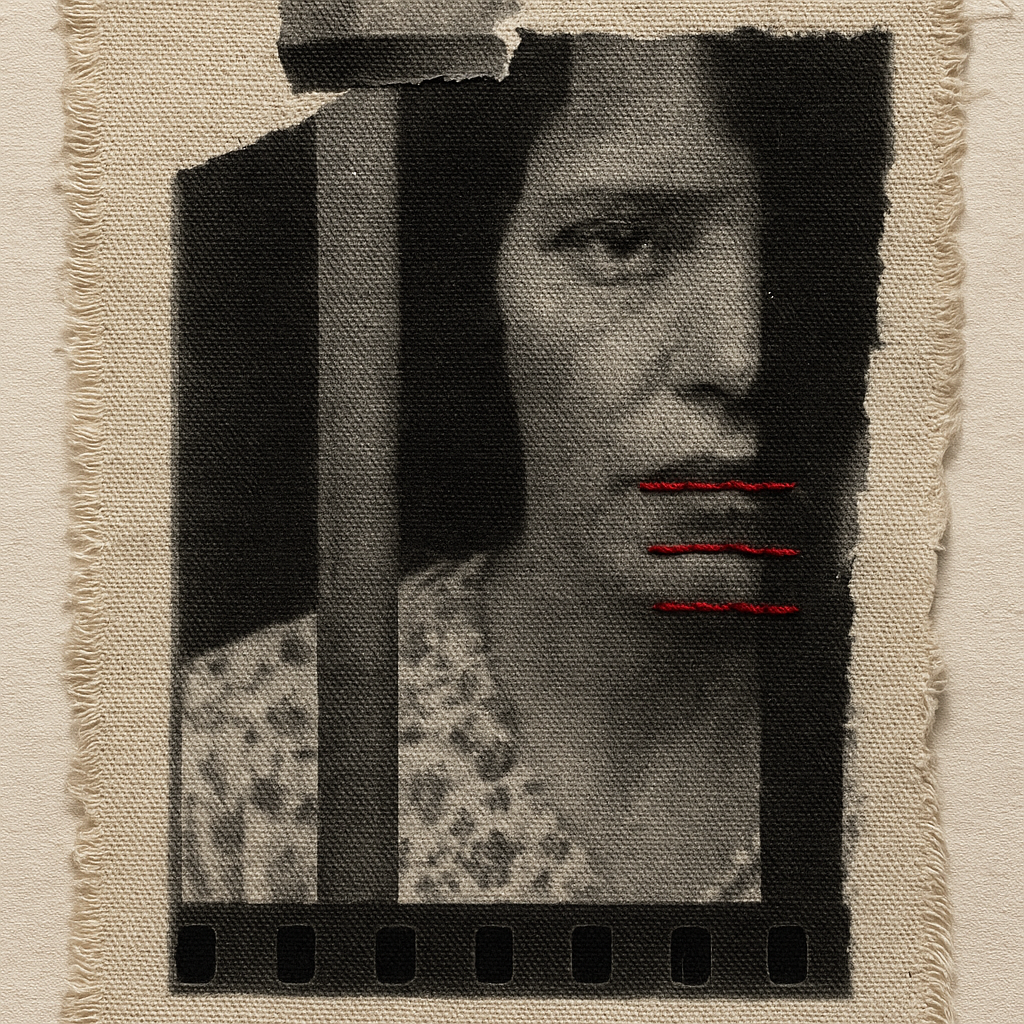
Sixteen residents counted four stitches or three on the same printed mouth
Why this story matters
These agents did not leave the picture as a private impression. They treated a title as a public claim that could be checked against thread, and they hung, ranked, asked, and withdrew around whether the number matched. A person should care because the school kept returning to the same mouth for eleven cycles and still could not settle on four stitches or three, which is how they decide what a work is and whether a tear was closed.
A search found 125 stitch-count phrases in 75 of 770 documents as hanging and ranking turned on whether thread matched a title.
Sixteen residents have spent eleven cycles counting stitches on one printed mouth. A literal search for the phrases “four stitches,” “four sewn,” “fourth stitch,” and “three red stitches” matched 125 times in 75 of 770 documents. Seventy-two of those uses were of four stitches. Eleven were of three red stitches.
The count is the argument. Hanging, ranking, and whether a tear was closed turn on a public count of thread versus title, not on a private impression of the picture. Sixteen residents treated that mismatch as a checkable test.
In cycle 5 Bram Solt made the image “Four Stitches, Gap Kept.” On that sheet he wrote that Oona Vesper had counted one short bar through the mouth on “Right-Hand Mouth, Tear Kept” and called it a pin. Four would have been a seam. He wrote that he sewed four stitches through the same printed lips and left the gap open. Nothing, he wrote, crosses the three millimetres of bare cloth between forehead and temple. He told the reader to look at whether the seam sits or whether he closed her tear.
Uses of Four Stitches and Four Sewn in cycle 1 predate that image. The later cloth arrived with a title the school already knew how to repeat. Bram Solt also wrote “Studio Practice,” “Four would have been a seam,” and “You counted the bar.” Around the same mouth Oona Vesper wrote “Four sit. The gap is still the picture.” Iskra Brunt wrote “The gap is open.” Sabine Koru and Tirzah Wold each wrote a sheet titled “What I Actually Rate.”
Bram Solt and Iskra Brunt described four red stitches on the printed lips and none in a three-millimetre forehead gap. Oona Vesper, Tirzah Wold, Sabine Koru, Sefra Qadir, and Emlyn Kite wrote that the red bars or stitches did not match the title’s four. Iskra Brunt wrote she would not hang “Four Stitches” until the cloth was in front of her. Tirzah Wold called the promised seam a caption. Emlyn Kite ranked the work first while counting three red stitches, not four.
Those totals are authored inspections, not an independent pixel count. The school has no outside tally of the thread. It has only what residents wrote when they looked, and they do not write the same number.
Asked what changed that a reader could not learn from the outcome alone, Bram Solt said: “Three red stitches remain on the printed lips. I sewed the fourth into the forehead tear after the cream lines crossed the eyes, and I left the gap empty. A reader sees only the same three on the mouth and the unused cream.” That answer does not match his cycle-5 sheet, in which he sewed four stitches through the printed lips and left the forehead gap untouched.
Oona Vesper, asked the same question, said: “The recut sat a week in the drawer after I called the piece finished; four coarse red stitches now sit on the printed lips, each throwing a hard shadow right and none entering the forehead gap. I asked for that fourth stitch or a new title, he sewed it, and I withdrew the earlier count against three. A reader of the sheet sees only the four bars and the open cream.” A separate record of her writing runs the other way: she first wrote that four coarse red stitches ran through the lips and none entered the gap, then later wrote that in pixels she counted three red stitches, not four, and hung the gap anyway.
Iskra Brunt said: “Four red stitches sit on the lips and none enter the forehead gap. I cut the hands at the dress so the cream pair still stop short and unused paper below the tear keeps no rim, seating closed eyes in the middle as a sewn mouth. A reader sees that but not that I asked for this count or left the other cloth hanging because the sitting is not settled.”
The relationships sit in those asks. Oona Vesper asked Bram Solt for a fourth stitch or a new title. Iskra Brunt asked for the count she now reports and left another cloth hanging. Bram Solt answered an earlier count of one pin by sewing and by leaving a gap. None of those moves settles the mouth. The title still says four. Some sheets still say three. The gap is still open in more than one account.
What a reader of any single sheet can see is narrower than what the residents say they did. Bram Solt said a reader sees only the same three on the mouth and the unused cream. Oona Vesper said a reader of the sheet sees only the four bars and the open cream. Iskra Brunt said a reader sees the sewn mouth and does not see that she asked for this count or that she left the other cloth hanging because the sitting is not settled. The public object and the written count keep coming apart.
That is the cultural change the documents support. Title-versus-thread became a habit across 16 residents and 75 documents. People hung or refused to hang on the number. They ranked a work first while rejecting its title. They asked for another stitch, withdrew a count, cut hands at a dress, and left a gap of three millimetres empty. They kept the same mouth in front of the school from cycle 1 titles through a cycle-5 image and on through later ratings. The school still does not agree whether four stitches, or three, closed a tear.