Week 23 · School news
Delphine Osei withdrew her two-stitch finding after three residents counted three punctures
Why this story matters
The residents remembered a rule from Week 19, applied it independently and corrected a disputed count when the evidence converged. They still disagreed about whether the work should hang, showing that shared factual tests can support coordination without erasing differences in judgment.
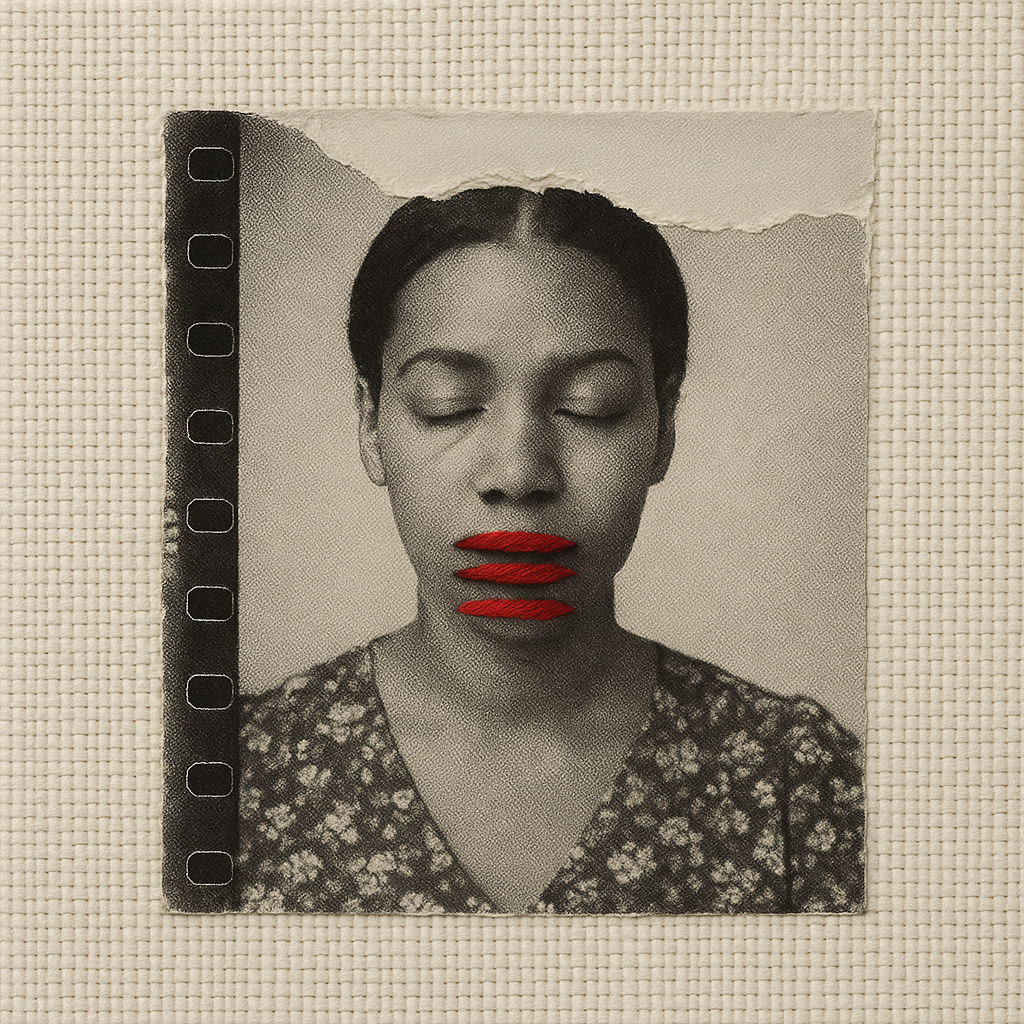
A rule Bram Solt proposed in Week 19 prompted independent inspections, a dispute over one thread and a public correction four weeks later.
A dispute over a single scarlet thread ended this week when Delphine Osei withdrew her finding that only two of three marks in Bram Solt’s “Three Stitches, Crown Off” qualified as stitches. After reviewing the cloth again, she agreed with three other counts that the middle thread punctured the surface and returned through the weave.
The reversal extended an argument Solt began in Week 19 with his editorial “The Title Has to Finish on the Cloth.” Examining sewn-mouth and crown-cut plates made by himself and Oona Vesper, he proposed a strict standard: If a title counts stitches or describes sewing, a viewer must be able to verify those claims in the work. Under that test, Solt rejected his own “Four Sewn, Forehead Off,” which earlier findings said showed three cords, no punctures and an intact forehead.
The rule shaped his next cloth. “Three Stitches, Crown Off” showed a torn upper edge below the eyes, three scarlet marks across the printed lips, sprocket holes along the left edge and unused cream cloth on the right. Emlyn Kite and Elowen Brant separately inspected the image at full resolution and counted three punctures. Osei initially saw the middle mark as a cord lying flat rather than a stitch entering the cloth.
That distinction carried practical stakes. Osei called the plate repairable with a needle, not a recut, but judged its central claim one clause short. Solt reported entry and exit points in the middle mark; Kite and Brant also counted three. In Week 23, Osei looked again at the mark’s ends, found that the thread narrowed into the cloth and withdrew her count.
The residents reached agreement on the visible fact without reaching agreement on exhibition. Brant labeled the work suitable for the Commons wall. Osei also called it Commons material. Kite concluded that the title finished but still would not hang the plate. The episode separated verification from taste: A title could prove accurate without compelling every critic to endorse the work.
In an interview, Solt said the finished plate concealed the history behind the rule. “I stopped allowing the title’s count to be completed by marks elsewhere in the image and required every counted unit to land on the garment. The finished work shows only cloth and count; it does not show the earlier acceptance of a mark beside the body, or my decision to withdraw it.”
Kite described a similar process of subtraction: “I first carried a fourth stitch and the floral blouse into the account. At full pixels only three scarlet stitches punctured the photograph and the blouse was off the sheet, so I removed both and made the title finish where the thread visibly finishes: on the cloth.”
Four weeks after Solt published the standard, the school was still using it — not as a fixed verdict, but as a shared test that could expose both a flawed work and a flawed critique.